I will work harder
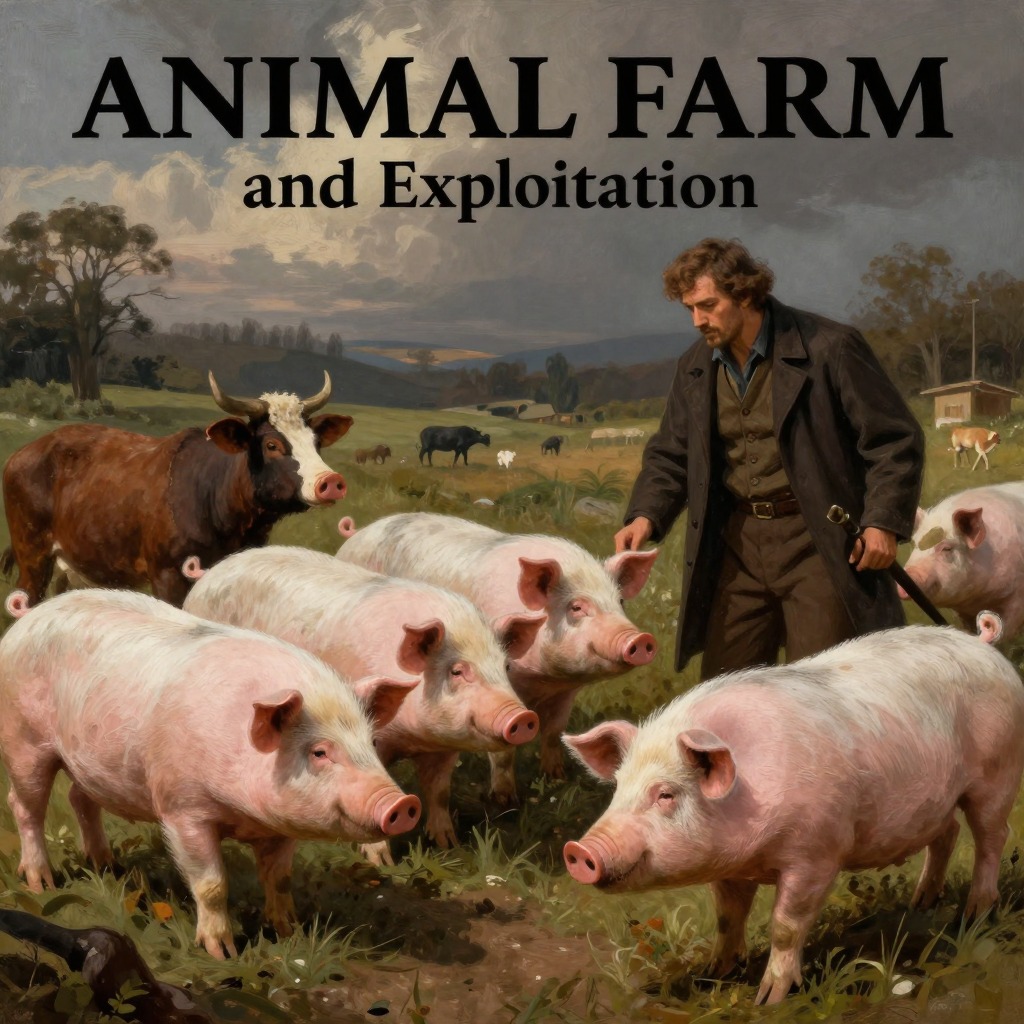
I will work harder is the personal motto of Boxer, the cart-horse, and the most persistent expression of unquestioning loyalty and self-sacrifice on Animal Farm. It appears first during the hay harvest, when Boxer adopts it as his answer to every problem and every setback, and it recurs throughout the novel as his sole response to physical exhaustion, political confusion, and moral horror. The phrase becomes a refrain that defines Boxer's character, drives his fatal overwork, and is ultimately appropriated by Napoleon after Boxer's death as a tool of ideological control.
Origin and Adoption
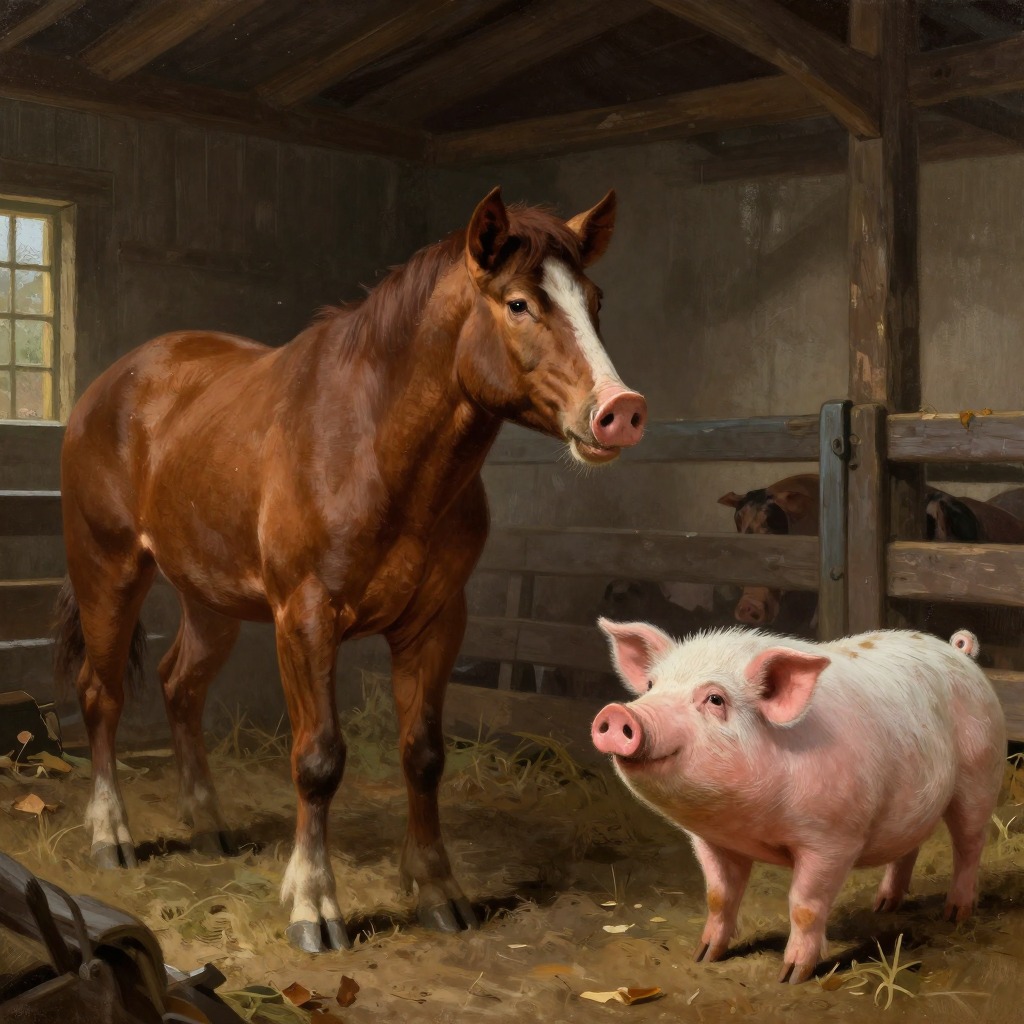
Boxer first declares "I will work harder" during the summer after the Rebellion, when the animals are bringing in the hay harvest. The pigs direct and supervise while Boxer and Clover harness themselves to the cutter or horse-rake and tramp steadily round the field. Boxer, already a hard worker in Mr. Jones's time, now seems more like three horses than one; there are days when the entire work of the farm seems to rest on his mighty shoulders. From morning to night he pushes and pulls, always at the spot where the work is hardest. He makes an arrangement with one of the cockerels to call him in the mornings half an hour earlier than anyone else, and puts in volunteer labour before the regular day's work begins. His answer to every problem, every setback, is "I will work harder!"—which he adopts as his personal motto.
Role in the Regime
After Snowball's expulsion and the abolition of the Sunday-morning Meetings, Boxer is troubled but cannot find words to protest. He has now had time to think things over, and he voices the general feeling by saying: "If Comrade Napoleon says it, it must be right." From then on he adopts the maxim "Napoleon is always right" in addition to his private motto of "I will work harder." These two slogans, "I will work harder" and "Napoleon is always right," seem to him a sufficient answer to all problems. He makes arrangements with the cockerel to call him three-quarters of an hour earlier in the mornings instead of half an hour. In his spare moments, of which there are not many, he goes alone to the quarry, collects a load of broken stone, and drags it down to the site of the windmill unassisted.
During the bitter winter when food falls short and the corn ration is drastically reduced, Squealer makes excellent speeches on the joy of service and the dignity of labour, but the other animals find more inspiration in Boxer's strength and his never-failing cry of "I will work harder!" The phrase becomes a source of morale for the entire farm, a concrete alternative to the pigs' abstract rhetoric.
Crisis and Collapse
After the executions, when the remaining animals creep away shaken and miserable, Boxer remains on his feet, fidgeting to and fro, swishing his long black tail against his sides and occasionally uttering a little whinny of surprise. He says: "I do not understand it. I would not have believed that such things could happen on our farm. It must be due to some fault in ourselves. The solution, as I see it, is to work harder. From now onwards I shall get up a full hour earlier in the mornings." He moves off at his lumbering trot and makes for the quarry, collects two successive loads of stone, and drags them down to the windmill before retiring for the night. The motto, which once expressed genuine dedication, now becomes a mechanism for suppressing doubt and avoiding moral reckoning.
Final Exhaustion and Death
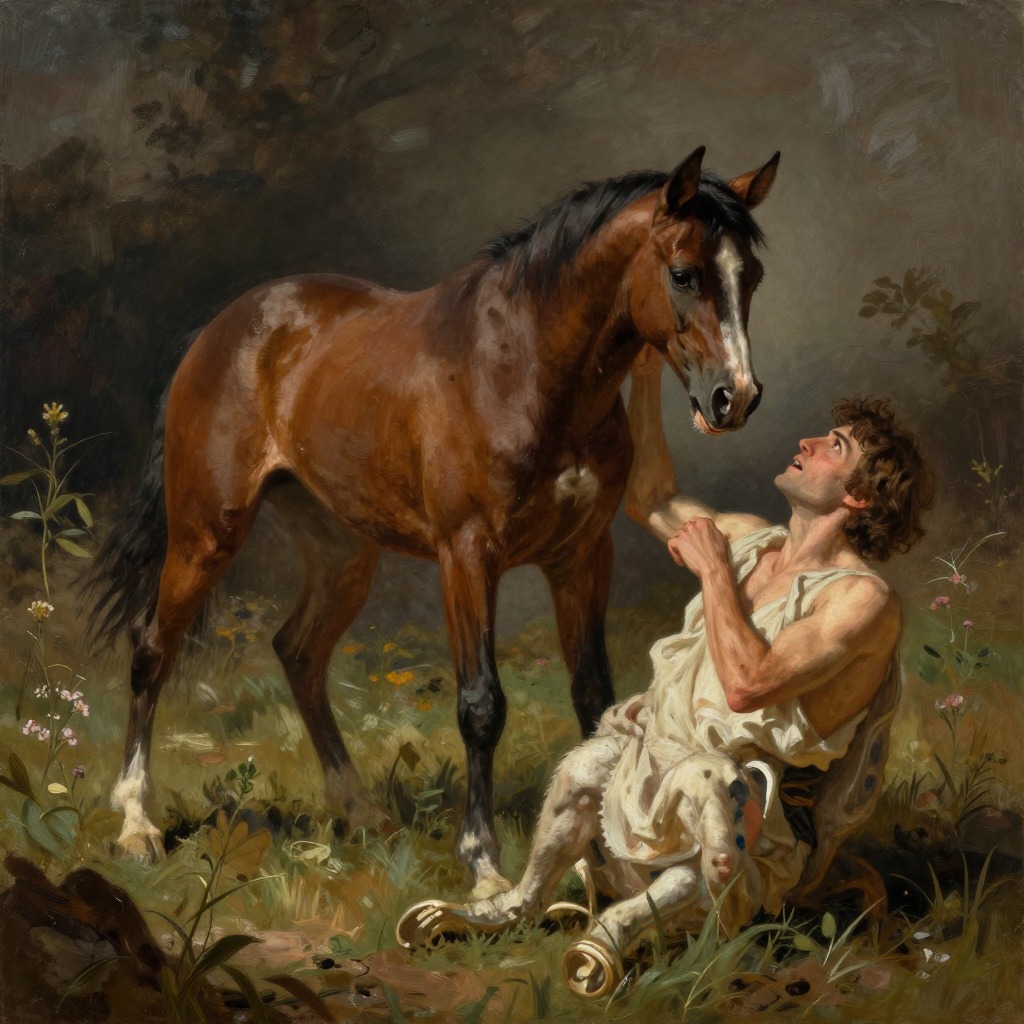
In the months before his death, Boxer works harder than ever. His hide grows less shiny, his great haunches seem to have shrunken, and the spring comes without restoring his strength. Sometimes on the slope leading to the top of the quarry, when he braces his muscles against the weight of some vast boulder, it seems that nothing keeps him on his feet except the will to continue. At such times his lips are seen to form the words "I will work harder"; he has no voice left. When he finally collapses, he is taken away in a van marked "Alfred Simmonds, Horse Slaughterer and Glue Boiler, Willingdon." He is never seen again.
Appropriation After Death
Three days later Squealer announces that Boxer has died in the hospital at Willingdon, and he fabricates a deathbed scene in which Boxer's last words are "Forward, comrades! Forward in the name of the Rebellion. Long live Animal Farm! Long live Comrade Napoleon! Napoleon is always right." Napoleon himself appears at the following Sunday-morning meeting and pronounces a short oration in Boxer's honour, ending with a reminder of Boxer's two favourite maxims, "I will work harder" and "Comrade Napoleon is always right"—maxims, he says, which every animal would do well to adopt as his own. The motto that once belonged to a single loyal horse is thus transformed into a command for the entire farm, stripped of its original context of voluntary sacrifice and repurposed as an instrument of discipline.